



When people think of visiting museums in Paris, they often imagine vast galleries and hours of walking. Musée d’Orsay is a little different.
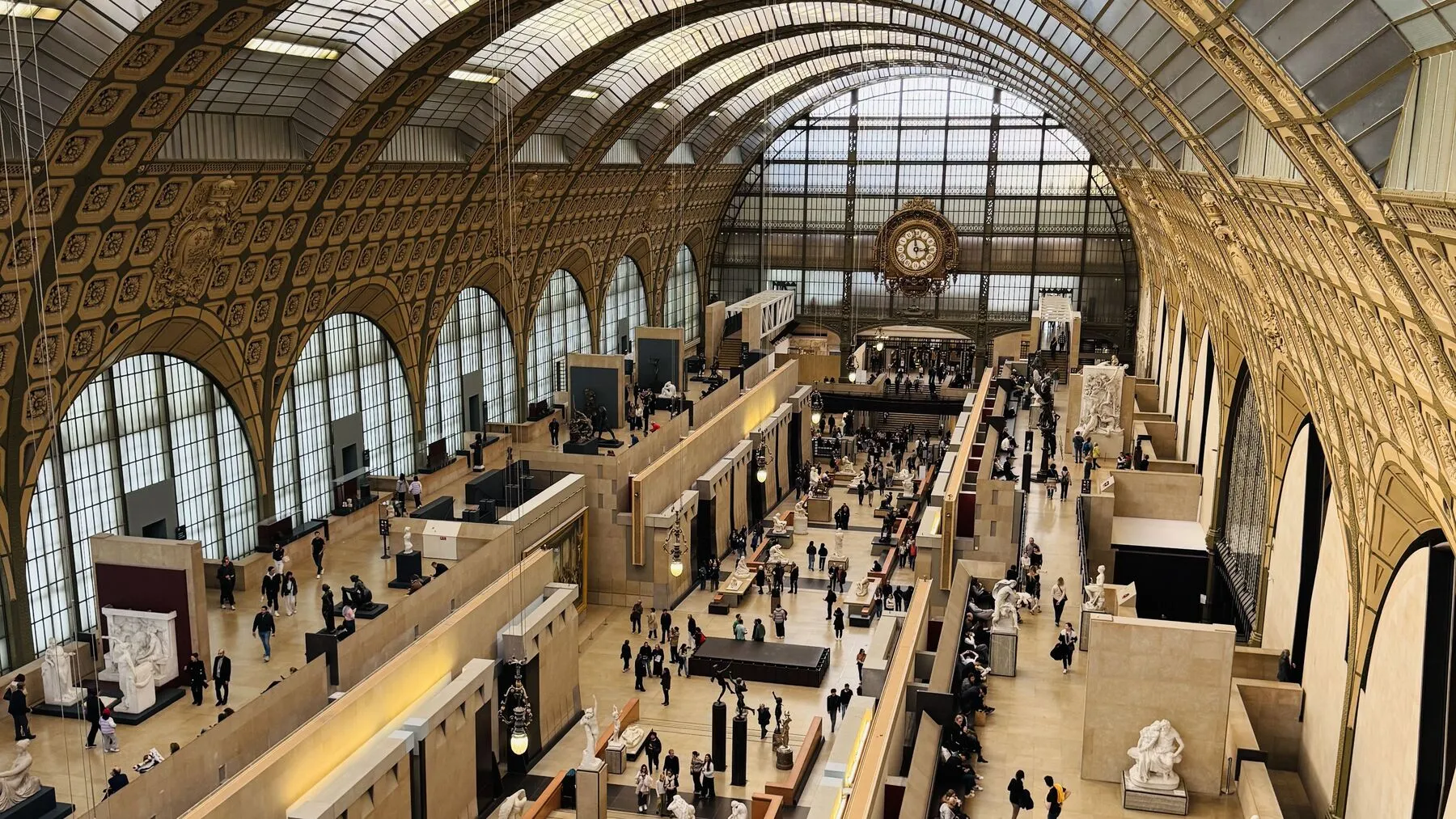
The moment you step inside, the atmosphere of the former railway station—with its soaring ceilings and grand architecture—makes an impression. But what truly sets the museum apart is its collection. From Van Gogh to Monet, the artworks are both exceptional and surprisingly accessible.
Exploring the museum feels smooth, focused, and enjoyable. Instead of getting lost for hours, you can have a genuinely memorable experience in a relatively short amount of time. For that reason, I personally enjoyed Musée d’Orsay more than the Louvre. In short, it’s a museum that leaves a lasting impression without feeling overwhelming.
In this guide, I’ll show you how to make the most of your visit, what to pay attention to, and what to expect inside the museum, step by step. Let’s get started.
ℹ️ Practical Information for Visiting Musée d’Orsay
In this section, you’ll find a few small but useful details that can make your visit smoother and more enjoyable. Hopefully, they’ll come in handy.
🏛️ The Story Behind Musée d’Orsay
Musée d’Orsay was not originally built as a museum.
The building opened in 1900 as a railway station for the Paris World’s Fair under the name Gare d’Orsay. Considered highly modern at the time, the station served its purpose for many years. As trains became longer and platforms could no longer accommodate them, the building gradually lost its original function. After being used for various purposes, it eventually fell into disuse.

In the 1970s, demolition was even considered. Fortunately, the building was preserved and underwent a major transformation instead. In 1986, it reopened as the museum we know today.
Even now, you can still feel the atmosphere of the old railway station while exploring the museum. The soaring ceilings, the vast central hall, and the iconic clock all serve as reminders of its past.
📍 Location & Getting There
Musée d’Orsay is located on the Left Bank of the Seine, right in the heart of Paris. It’s almost directly across the river from the Louvre, making it very easy to include in your sightseeing plans.

Getting there by public transport is straightforward. The Musée d’Orsay station on the RER C line is located right next to the museum. If you enjoy walking, you can also reach it from the Louvre in about 10–15 minutes by following the river. It’s a pleasant route and well worth the walk.
⏱️How Much Time Should You Spend Here?
In our opinion, the ideal visit lasts around 2 to 2.5 hours.
That said, this estimate is enough if you want to explore the highlights and spend some time with the artworks that catch your attention. If you’re the type of visitor who enjoys researching the stories behind each painting and examining every detail, even a full day might not be enough.
For a relaxed visit that allows you to wander through the galleries and appreciate the museum’s most important works, two hours should be plenty.
Orsay is not a massive museum like the Louvre. It’s more compact, but the quality of its collection is exceptional. Rather than wandering aimlessly, following a simple route will help you make the most of your time and enjoy a much smoother experience. Later in this guide, I’ll explain that route in detail.
🎟️ Tickets, Museum Pass & Food
Queues at the entrance can be quite long, especially during busy hours. Waiting in the ticket line can easily eat into your sightseeing time before you’ve even stepped inside.
My recommendation is simple: buy your ticket in advance or use the Paris Museum Pass. Also, don’t forget that the museum is closed on Mondays, so plan your visit accordingly.
If you’re using the Paris Museum Pass, the process is even easier. Admission is included, and you can skip the ticket queue. Depending on the season, you may still need to reserve an entry time, but the experience is generally much faster. In our case, it was by far the most convenient option, allowing us to enter without waiting in line.
Musée d’Orsay also has an on-site restaurant housed in a beautiful historic dining room. However, it tends to be extremely crowded. Around lunchtime, queues can be quite long, finding a table can be difficult, and service may be slow.

If your schedule is tight, eating elsewhere is usually the better option.
🧭 How to Visit Musée d’Orsay Efficiently
The key to visiting Musée d’Orsay is following the right order.
Once inside, you’ll notice several galleries and directions to choose from. Without a plan, you’ll likely find yourself backtracking and wasting time.
Our recommendation is simple: head straight to the top floor as soon as you enter. Don’t stop along the way—take the elevator or stairs directly to Level 5.
This is the heart of the museum. Works by Vincent van Gogh, Claude Monet, Pierre-Auguste Renoir, Edgar Degas, and many other famous artists are displayed here. It’s also the busiest part of the museum.
Starting here allows you to explore the most popular galleries before the crowds build up, while also experiencing the museum’s highlights first. Take your time on this floor and don’t rush.
One small but useful note: there are no Levels 3 or 4 in the museum. Don’t waste time looking for them—they simply don’t exist.
When you reach Level 2, you can move through it fairly quickly if you’re short on time. This section mainly contains decorative arts, furniture, and period interiors.
Level 1 and the ground floor are closely connected and can be explored together. Here you’ll find large-scale paintings from the pre-Impressionist period, along with an impressive collection of sculptures. Some of the sculptures are remarkably lifelike and well worth a closer look.
Recommended Route
👉 Level 5 → Quick visit to Level 2 → Level 1 and the Ground Floor
🎨 Level 5: The Most Impressive Part of the Museum
Let’s head back to Level 5.
As soon as you arrive, you’ll find yourself in a long gallery lined with some of the museum’s most famous masterpieces. This is where the visit really begins.
🧑🎨 The Van Gogh Gallery
At the beginning of the gallery, you’ll enter the Van Gogh section. This is usually one of the busiest areas in the museum.
Musée d’Orsay is home to one of the world’s most important collections of works by Vincent van Gogh, with around 27 original oil paintings in its permanent collection. That alone makes it one of the best places to experience Van Gogh’s art.

Some of his most famous works are displayed here, including Starry Night Over the Rhône, Self-Portrait, and The Bedroom in Arles. One of my personal favorites is Wheatfield with Crows.
Seeing these paintings in person feels completely different from seeing them in photographs.
What struck me most were the brushstrokes. From a distance, everything comes together as a complete image. As you move closer, the painting seems almost chaotic. Individual strokes, textures, and colors appear disconnected. Then you take a few steps back, and suddenly everything falls into place again.

The colors are equally surprising. They’re far more vivid and dynamic than they appear in photos. The paintings almost seem to move, as if there’s a flow running through them. Seeing them in a book, on a screen, or in a reproduction simply isn’t the same as standing a few meters away from the originals.
🎨 Monet & Impressionism
Further along the gallery, you’ll reach the section dedicated to Claude Monet and the Impressionists.
The intensity and emotional weight of Van Gogh’s works give way to something much softer. Here, everything revolves around light.
At first glance, some of the paintings may even seem a little blurred or unfinished. But that’s not a flaw—it’s exactly what the artists intended. As you look more closely, you begin to notice how layers of color work together to create the scene. This effect is especially noticeable in Monet’s landscapes, water scenes, and skies.

That’s the essence of Impressionism. Rather than painting a scene exactly as it appeared, the artist tries to capture the light, atmosphere, and feeling of a particular moment.
Just like Van Gogh’s paintings, these works transform depending on your distance from them. Step back, and the image suddenly comes together. Move closer, and it breaks apart into brushstrokes and patches of color.

One of the highlights is Water Lilies by Monet. At first, it seems like a simple scene—water, reflections, and subtle color transitions. Yet the use of color is extraordinary. At times, it’s difficult to tell where the water ends and the reflection of the sky begins.

Another painting that caught our attention was Renoir’s Bal du moulin de la Galette from 1876. The scene is full of life and movement, and the emotions of the people gathered together almost seem to spill out of the canvas.

🕰️ The Clock Window
At the end of the gallery, you’ll arrive at one of the museum’s most iconic spots: the giant clock window.
Through the glass face of the clock, you’ll see a beautiful view of Paris framed perfectly by the circular structure. Looking out from inside the museum feels almost like looking at the city through a giant picture frame. On a clear day, you can even spot the silhouette of Sacré-Cœur in the distance.

This is one of the most photographed locations in the museum, so it can get crowded. Fortunately, people usually move through quickly, and it’s not difficult to find a moment for your own photo.
⬇️ Heading Down to Level 2
Near the clock gallery, you’ll also find a small gift shop selling museum-themed souvenirs and books. It’s a nice place for a quick look around, but I’d recommend not spending too much time here if you’re following a limited schedule.
After taking the stairs down, you’ll arrive at Level 2.
Here, the focus shifts away from Impressionist paintings and toward decorative arts. You’ll find period furniture, everyday objects, ornate wooden pieces, textiles, and decorative items from earlier eras. Many of the handcrafted details are remarkably impressive, especially when you consider the time in which they were created.
That said, after the excitement of Level 5, this section can feel like a change of pace.
The atmosphere becomes quieter and more focused on craftsmanship and design rather than famous paintings. If you’re interested in decorative arts or art history, you may want to spend more time here. Otherwise, it’s perfectly reasonable to move through this floor fairly quickly and continue down to the ground level.
🏛️ Level 1 & the Ground Floor: Monumental Paintings and Sculptures
Once you reach Level 1, after the light-filled Impressionist galleries on Level 5, you’ll find yourself surrounded by much larger, more dramatic works. The first thing that catches your eye is the scale of the paintings. Massive canvases stretch across entire walls, depicting battles, mythological stories, historical events, and grand scenes from the past.
Sculptures also play a much bigger role on this floor. The figures displayed throughout the galleries are incredibly detailed. Some are so lifelike that they almost seem ready to move.
One of the works that stood out to us was Penelope Awaiting Odysseus.
At first glance, it’s a simple scene. Penelope sits alone, waiting. Yet her posture, expression, and the overwhelming sense of silence create a remarkably powerful image.
You can almost feel the patience and despair of someone who spent nearly twenty years waiting for Odysseus to return. The weight of that endless wait seems etched into her face. But it’s not only sadness that comes through. You can also sense the intelligence and determination that define her character in Homer’s epic—the woman who cleverly delayed her suitors and refused to give up hope. The sculpture somehow captures all of those emotions at once.
It’s a quiet piece, but one that says a great deal.
🐎 The Knight in Paradise
This was one of the paintings that impressed me the most.
The use of light and the positioning of the figures create an almost dreamlike atmosphere. It’s the kind of painting you can stand in front of for a long time without getting bored.
For me, it was one of the rare artworks that genuinely conveyed a sense of paradise.
Perhaps it’s because I’m a man, but what fascinated me most was the knight’s apparent indifference to all the beauty surrounding him. The reflections on his armor, his posture, and the overall composition of the scene are all carefully considered.

The idealized world around him feels almost like a reward—a place reserved for those who have reached a certain level of achievement. By looking at the reflection in his armor, you can even tell that he’s watching a kite in the distance.
I have a feeling this painting will remain one of my favorites for quite some time.
🕌 Egyptian Dancers (Les Almées)
As we continued through the galleries, we came across a very different kind of artwork.
The clothing, the setting, and the Eastern-inspired figures immediately stand out. Seeing a scene from the East within a collection of European art naturally creates a striking contrast.
The painting doesn’t necessarily depict a specific historical ruler. The figure could represent a sultan, a pasha, or simply a generalized interpretation of the East. In fact, many paintings of this kind were never intended as accurate portraits. Instead, they reflect how Western artists imagined and portrayed Eastern cultures.

This is closely connected to the Orientalist movement that became popular in nineteenth-century Europe. In many of these works, the Ottoman Empire and the broader East are presented as exotic, mysterious, and powerful.
What you’re seeing here is therefore more than just a person or a scene—it’s also an interpretation. In a way, you’re looking not only at the East itself but also at how Europe viewed the East during that period.
👑 Reception of Ambassadors by Louis XIV
This painting is built entirely around order, protocol, and the display of power.
Every figure seems carefully positioned. The ambassadors occupy the foreground, members of the court stand behind them, and larger groups fill the background. Everyone’s place within the composition reflects their social status.
The setting itself reinforces this message. High ceilings, lavish decoration, and the immense scale of the room all contribute to an atmosphere of authority and grandeur. Nothing feels accidental.

What makes the painting particularly interesting is the contrast it creates with the Orientalist works nearby.
Where those paintings emphasize mystery, atmosphere, and individual figures, this scene presents structure, hierarchy, and control. One invites interpretation; the other makes a statement.
Seen side by side, they reveal two very different visions of power and society—one shaped by European perceptions of the East and the other by Europe’s own image of itself.
🐪 Pilgrims Going to Mecca
At first glance, this painting looks like a traditional caravan scene filled with camels, travelers, and a vast desert landscape.
In reality, the scene depicts something much more significant.
Painted by Léon Belly in 1861, the work portrays a group of pilgrims making their way to Mecca. This isn’t a trading caravan or a tribal migration but a religious journey undertaken by people united by faith.

One of the most impressive aspects of the painting is its realism. From a distance, it almost resembles a photograph. As you move closer, the brushstrokes and subtle color transitions become visible, revealing the artist’s technical skill.
Belly traveled extensively through the region and based many of his paintings on firsthand observations. As a result, the light, landscape, and figures feel remarkably authentic.
At the same time, the painting also reflects the Orientalist perspective common in nineteenth-century Europe. The East and North Africa were often portrayed as distant, challenging, and unexplored worlds.
The individuals in the scene are presented less as distinct personalities and more as part of a larger collective journey, reinforcing that sense of distance and scale.
🐻❄️ Polar Bear
Another highlight of this floor is the famous Polar Bear sculpture by François Pompon. Created in the early 1920s, it became the artist’s most celebrated work.
Unlike traditional sculptors who focused on anatomical detail, Pompon simplified the animal’s form to its essential shapes and movements. The result is surprisingly modern despite its age.
The sculpture also reflects a broader shift in artistic styles during the early twentieth century, moving away from highly detailed realism toward cleaner and more simplified forms.

Its combination of simplicity and realism has made it one of the museum’s most photographed artworks.
👶 Petite Misère
Among the monumental paintings and dramatic scenes, this modest portrait stands out precisely because of its simplicity. The child’s expression is deeply affecting. The posture, the gaze, and even the way the hat is held seem to tell a story.

The figure appears to be asking for help, but without theatrics or exaggeration. The appeal feels quiet and understated, which somehow makes it even more powerful.
When you make eye contact with the child, the painting creates an unsettling sense of reality. It serves as a direct reminder of the hardships faced by the lower classes in nineteenth-century Paris.
👷 The Ages of the Worker (Les Âges de l’Ouvrier)
This work is actually a series of three paintings rather than a single canvas. Created by Léon Frédéric between 1895 and 1897, the series tells the story of a worker’s life through three stages: childhood, adulthood, and old age.
At first glance, the scenes appear crowded and complex. But once you spend some time with them, a clear narrative emerges. The same character appears throughout the series, gradually shaped by labor, exhaustion, and the passage of time. With each stage, the physical and emotional weight of life becomes more visible.
Rather than presenting an idealized world, the artist focuses on the realities of work and the lasting impact it leaves on the human body and spirit.

🏁 Final Thoughts
In my opinion, Musée d’Orsay is one of the most enjoyable museums in Paris.
The collection is outstanding. Seeing masterpieces by Van Gogh and Monet alone would justify a visit, but the experience doesn’t end there. The lower floors are filled with equally impressive paintings, sculptures, and historical works that add depth and variety to the museum.
If you’re short on time in Paris and need to choose between museums, I would comfortably place Musée d’Orsay near the top of the list.
Personally, I enjoyed Musée d’Orsay more than the Louvre.
Continue Exploring
→ 4 Days in Paris — See how Musée d’Orsay fits into our complete Paris itinerary, including the museums, neighborhoods, landmarks, and experiences we explored throughout the city.


Yorumlar
Comments