

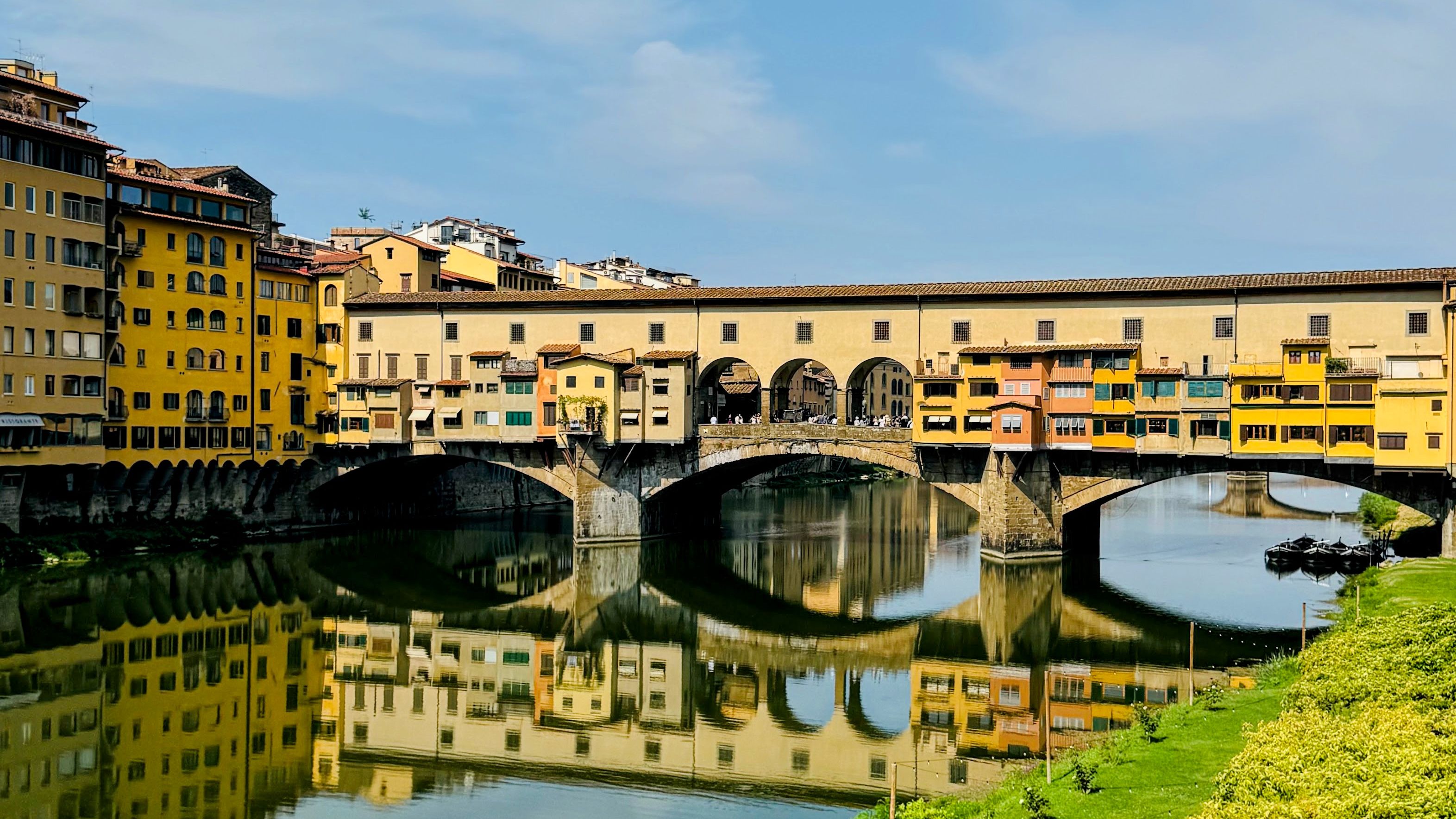


Toledo was the third stop on our Andalusia road trip, after Granada and Madrid. We left our hotel in Madrid early in the morning and set off for Toledo by car.
Madrid and Toledo are quite close, and the drive normally takes around an hour. Morning traffic, however, can be heavy. With commuters, commercial vehicles and trucks on the road, the journey took us a little longer than we had expected.
It was still early when we arrived in Toledo. The city was only just waking up, and the streets were quiet.

You can drive into Toledo’s historic centre, and there are plenty of car parks around the area. They do fill up quickly as the day goes on, though. If you arrive later in the day, it may make more sense to leave your car outside the historic centre and continue on foot. The streets become increasingly narrow as you get closer to the centre, and driving around looking for a space in already full car parks can quickly become frustrating.
Since we arrived early, we managed to find a parking space quite close to the historic centre. Even then, we could see that many of the car parks were already beginning to fill up.
🏰 Toledo’s History and the City of Three Cultures
Before we start walking through Toledo, it’s worth knowing a little about its history. Few places in Spain bring so many different periods of the country’s past together in one city.
Toledo’s history stretches back to Roman times. After the fall of the Roman Empire, the city became the capital of the Visigothic Kingdom in the 6th century. In the early 8th century, like much of the Iberian Peninsula, Toledo came under Muslim rule and remained an important city in Al-Andalus for around 350 years. In 1085, King Alfonso VI of Castile captured the city, bringing Toledo back under Christian rule.

What makes Toledo particularly interesting is the legacy left by Christian, Muslim and Jewish communities over the centuries. This is why Toledo is often known as the “City of Three Cultures.” As you walk through the historic centre today, you can pass a cathedral, come across a former mosque and find a synagogue just a few streets later.
Toledo’s historic centre was added to the UNESCO World Heritage List in 1986.
🧭 Exploring Toledo on Foot
After leaving the car, we started walking towards Toledo’s historic centre. We hadn’t set aside a lot of time for the city. Rather than visiting museums and historic buildings one by one, our plan was simply to walk through the streets and explore Toledo at our own pace.
⏱️ How Much Time Do You Need in Toledo?
Toledo’s historic centre is quite compact, so half a day is generally enough to get a good feel for the city. If you mainly want to wander through the streets, see the major landmarks from the outside and stop for a break or two along the way, you can plan on spending around 3–4 hours here.
We had about two hours, and that was enough for us to explore a good part of the old town on foot. If you also want to go inside Toledo Cathedral, the synagogues and museums, I’d recommend setting aside at least half a day. For a more detailed visit, you could easily spend a full day in Toledo.
⛪ Toledo Cathedral
One of the most impressive buildings we came across while walking through Toledo was the cathedral rising right in the heart of the old town. Officially known as the Santa Iglesia Catedral Primada de Toledo, it is considered one of the most important religious buildings not only in Toledo, but in Spain.

Construction began in 1226 on the site of the former Great Mosque and took around 250 years to complete. The result is a monumental cathedral dominated by Gothic architecture.
Since we were short on time, we didn’t go inside. Plaza del Ayuntamiento, the square in front of the cathedral, is also worth spending a little time in. Surrounded by the cathedral and other historic buildings, it feels surprisingly open after walking through Toledo’s narrow streets.

In one corner of the square, we noticed an unusual water feature that we couldn’t quite make sense of at first. We later learned that it was part of Tres Aguas (Three Waters), an art project created for Toledo by Spanish artist Cristina Iglesias in 2014.
The metal surface at the bottom, with its pattern of intertwined roots, represents a riverbed. Water flows across it in cycles, gradually filling the basin before receding again, reflecting the rise and fall of the Tagus River.
🏘️ Toledo’s Narrow Streets and Medieval Houses
After leaving the cathedral and heading back into Toledo’s narrow streets, we began to see more clearly just how well preserved the old town is. Cobbled streets, buildings standing almost shoulder to shoulder, old wooden doors and stone façades make many parts of the city look as though very little has changed since the Middle Ages.

One of the things I liked most about Toledo was that this historic setting doesn’t feel like something preserved purely for tourists. Everyday life still continues inside these centuries-old buildings. The interiors of the houses and shops may have been adapted to modern needs, but their historic façades have largely been preserved.

As you walk through the narrow streets, you occasionally pass beneath archways, come across small courtyards and suddenly find yourself in an open square you didn’t expect. Some of the streets are so narrow that you can’t help wondering how a car manages to get through them at all.
🕌 Traces of Al-Andalus and Mudéjar Architecture in Toledo
Another detail that caught our attention as we walked through Toledo was the influence of Andalusian architecture visible across the city. Horseshoe arches, brick façades and geometric patterns appeared here and there, sometimes in a small square and sometimes around the corner of an otherwise ordinary street.

The slender brick bell towers also reminded us of the old minarets we had seen throughout Andalusia. And there is a reason for that. When Toledo came under Christian rule, the city’s Islamic architectural traditions didn’t simply disappear. Muslim craftsmen continued to work in the city, combining elements of Islamic architecture—such as arches, brickwork and geometric decoration—with Christian buildings.
Over time, this architectural style became known as Mudéjar.
🏙️ Plaza de Zocodover
After making our way through the narrow streets, we arrived at Plaza de Zocodover, one of the liveliest spots in Toledo. Located in the heart of the historic centre, the square served for centuries as one of the city’s main meeting and trading places. Today, surrounded by cafés, restaurants and shops, it remains one of the busiest parts of the old town.

The name of the square is another reminder of Toledo’s past under Muslim rule. “Zocodover” is believed to come from the Arabic sūq ad-dawābb, meaning “market of the beasts of burden.” Once the site of animal markets, the square gradually became Toledo’s main public space, hosting everything from ceremonies to festivals over the centuries.
🏰 Alcázar of Toledo
Just a short walk from Plaza de Zocodover stands one of Toledo’s most imposing landmarks, the Alcázar of Toledo. Sitting at the highest point of the city, the site has been used for defensive purposes since Roman times because of its strategic position.
The Alcázar took much of its present form during a major reconstruction in the 16th century under Holy Roman Emperor Charles V. With towers at each of its four corners and a massive stone façade, the building is an impressive sight rising above Toledo’s narrow streets.

The Alcázar has served many different purposes throughout its history and today houses Spain’s National Army Museum. Since we were short on time, we didn’t visit the museum. After seeing the building from the outside, we continued our walk through Toledo.
One useful tip: if you walk around to the back of the Alcázar, you’ll find some lovely views over the river and the valley below.
🌄 A View Over Toledo
As we started walking downhill behind the Alcázar, we came across a great viewpoint. After spending so much time between the tightly packed streets of the historic centre, the city suddenly opened up in front of us. We stopped for a while to take in the view.

From here, you can see the lower parts of Toledo, the valley around the Tagus River and the hills on the other side. It’s also a good place to understand just how dramatically Toledo sits on top of a hill.
Only a few minutes earlier, we had been walking between narrow streets and closely packed buildings. From here, we could finally see the landscape surrounding the city as a whole. Toledo’s distinctive mix of brown and earthy tones was much more noticeable from this perspective.
🚶 One Last Walk Through Toledo
After leaving the viewpoint, we headed back into Toledo’s narrow streets. On our way to the car park, we tried to take streets we hadn’t walked along before.
We passed through more cobbled lanes, beneath archways and between medieval houses whose façades have survived for centuries. In Toledo, even when you’re heading towards the same destination, taking a different street can reveal something you haven’t seen before.

When we reached the car park, I checked the map and realised that in roughly two hours of walking, we had covered a surprisingly large part of the hilltop historic centre. It was a good reminder of just how compact Toledo’s old town really is. If you’re not planning to visit the museums or go inside the major historic buildings, you can see much of the city on foot within a few hours.

Of course, you’ll need more time if you want to explore the interiors and take longer breaks along the way. But if, like us, Toledo is a stop on a longer road trip, half a day is plenty of time to get a good feel for the city.
👋 Saying Goodbye to Toledo
After around two hours of walking, we returned to the car and it was time to leave Toledo. We hadn’t spent a long time in the city, but we had wandered through its narrow streets, seen its well-preserved medieval character and experienced how traces of different cultures still exist side by side.
What made Toledo particularly interesting to me was how well the historic centre has been preserved while everyday life continues inside buildings that have stood here for centuries.
If you have more time, you could easily spend a full day in Toledo visiting the cathedral, synagogues and museums. But if, like us, you’re on a longer road trip through Spain, don’t hesitate to add Toledo as a stop along the way. The historic centre is compact and easy to explore on foot, and even half a day gives you enough time to get a good sense of the city.
We said goodbye to Toledo, got back in the car and set off for the next stop on our route: Córdoba.
🧭 Keep Exploring
→ Córdoba Travel Guide — Discover the places we visited, our experiences and the route we followed in Córdoba, our next stop after Toledo.
→ Andalusia Road Trip & Travel Itinerary — Follow our complete journey through Andalusia, including Toledo and Córdoba, with all the stops and the route we took along the way.
Yorumlar
Comments