



Spain had been on our travel list for a long time, and Andalusia was the part we were most excited to explore. With centuries of different cultures leaving their mark on the region, its cities bring together everything from Islamic architecture to grand cathedrals, each with a character of its own.
Our seven-day journey started in Málaga and took us through Granada all the way to Madrid. After visiting Madrid and Toledo, we headed south again to Córdoba and Seville, then continued along the Atlantic coast through Cádiz and Tarifa to Ronda before returning to Málaga. Along the way, we saw much more than just the cities: the wide-open plains of La Mancha, the Atlantic coastline and the mountain roads of Andalusia all became part of the journey.
In this post, I’ve brought together our day-by-day route, how we travelled between cities, the stops we made along the way and how much the entire week cost us. You’ll also find links to our detailed travel guides for each city, from Granada and Madrid to Seville and Ronda, throughout the post.
If you’re planning a similar trip through Southern Spain, our 7-day route can be a useful starting point for building your own itinerary. Our journey began when we landed at Málaga Airport and, after seven days and plenty of kilometres on the road, ended right where it started.
⚡ 7 Days in Andalusia – Quick Overview
🕒 Duration: 7 days
🚗 Route: Málaga → Granada → Madrid → Toledo → Córdoba → Seville → Cádiz → Tarifa → Ronda → Málaga
💸 Total (2 Adults + 2 Children): ~€3,007
👤 Per Person: ~€752
✈️ Flights: €680
🏨 Accommodation: ~€702
🎟️ Museum & Attraction Tickets: ~€251
🚗 Car Rental + Transportation: ~€317
🍽️ Food & Drinks: ~€238
🛍️ Shopping & Souvenirs: ~€182
💶 Cash Expenses: ~€400
📱 Other Expenses: ~€238
🔥 Highlights: Alhambra · Royal Palace of Madrid · Toledo · Mosque–Cathedral of Córdoba · Alcázar de los Reyes Cristianos · Royal Alcázar of Seville · Plaza de España · Cádiz · Tarifa · Ronda · Alcazaba of Málaga
✈️ Our First Steps in Spain
We landed at Málaga Airport at around 10:30 in the morning, ready to begin our Andalusia road trip. The flight from Istanbul to Málaga takes about four hours, but thanks to the time difference between Türkiye and Spain, only around three hours had passed on the local clock. After passport control and collecting our luggage, we were out of the terminal by around 11:30.
Since our route through Andalusia covered several different cities, we decided that renting a car would be the most practical option for this trip.
🚗 Renting a Car
After comparing several options, we rented our car from Malagacar. Their prices were reasonable compared with the alternatives, the overall customer reviews were positive, and the cars came with full insurance coverage. Booking early can also help you get a better price.
Their fleet ranges from small economy cars to larger family vehicles. Another important advantage for us was that no deposit or credit card pre-authorisation was required when picking up the car.
If you’re planning to drive in Spain, I’ll share some practical notes about the roads, traffic and parking later in this post.
Once we had the car, we didn’t head straight to Granada. First, we stopped to stock up on water, drinks and snacks for the road. There’s a large Carrefour near Málaga Airport, which turned out to be a very convenient stop before setting off.
After finishing our shopping, we left for Granada at around 12:30. The distance between Málaga and Granada isn’t particularly long, so it was an easy drive.
And with that, our Andalusia road trip had officially begun.
🏰 Granada
After driving through Andalusia’s dry hills, olive groves and mountain scenery, we arrived at our hotel in Granada at around 2:00 pm. After a short break, we headed straight out to explore. With its narrow streets, historic squares and setting at the foot of the Sierra Nevada mountains, Granada was a great first stop on our Andalusia trip.
We started our walk in the city centre around Granada Cathedral and Plaza de Bib-Rambla before continuing along the Darro River. From there, we made our way through the narrow, maze-like streets of Albaicín to Mirador de San Nicolás. We watched the Alhambra from across the valley at sunset, then stopped by the Great Mosque of Granada just nearby.

The next morning was reserved for one of the most important stops of our entire trip: the Alhambra. Our visit included the Nasrid Palaces, the Generalife Gardens and the Alcazaba, and took us through to around midday. Once we had finished exploring the Alhambra, it was time to leave Granada behind.
📚 Detailed Granada Guides
→ Granada Travel Guide: The Last Stronghold of Al-Andalus — Follow our walking route through Granada, from the streets of Albaicín and the city’s historic squares to the main sights we visited along the way.
→ The Alhambra: A Journey into the Magical World of Al-Andalus — Read all the details of our visit to the Alhambra, including the Nasrid Palaces, Generalife Gardens and Alcazaba.
🏙️ Madrid
After leaving Granada, we reached Madrid after a drive of around four and a half hours. Most of the route was quiet and remarkably flat, so despite the distance, the drive itself wasn’t particularly tiring. We checked into our hotel, took a short break and then drove into central Madrid.
Our first stop was Retiro Park. After spending some time there, we walked through the streets of Salamanca, one of Madrid’s more elegant and lively neighbourhoods. In the evening, we stopped by Santiago Bernabéu Stadium. We hadn’t planned to attend a match or take a stadium tour, so after seeing it from the outside and walking around the area, we headed back to our hotel.

The next morning, we made our way to Madrid’s historic centre. We started the day at the Royal Palace of Madrid before continuing to Plaza Mayor. From there, we visited the Prado Museum, one of the city’s major art museums. Later in the day, we took in the views over Madrid from the rooftop of Círculo de Bellas Artes, walked along Gran Vía to Plaza de España and finished our day at the Reina Sofía Museum.
That brought our two days in Madrid to an end. Early the next morning, we checked out of our hotel and set off for the next stop on our route: Toledo.
📚 Detailed Madrid Guides
→ 2 Days in Madrid: Our Itinerary and City Notes — Follow the route we took during our two days in Madrid, including the squares, parks and museums we visited, along with our impressions of the city.
→ Royal Palace of Madrid: One of Europe’s Grandest Palaces — Explore our visit to the Royal Palace of Madrid, from its grand rooms and the Royal Armoury to the sections we visited, tickets and practical entry details.
⚔️ Toledo
We left Madrid early in the morning and drove towards Toledo. The two cities are quite close, and in less than an hour we had already arrived. We left the car in one of the car parks near the city centre and set off to explore Toledo on foot.

Toledo is fairly compact and easy to explore on foot. Its narrow streets, medieval stone buildings and traces of Moorish architecture stand out almost immediately. We walked through the old streets to Plaza de Zocodover, visited the square in front of Toledo Cathedral and saw the Alcázar of Toledo from the outside.
Along the way, we also stopped at a few viewpoints overlooking the city. By around midday, we were back at the car and ready to continue our journey south.
📚 Detailed Toledo Guide
→ Through the Streets of Toledo: Traces of Three Cultures — Follow our route through Toledo’s narrow streets and discover the main places we visited, along with the traces left behind by the city’s Christian, Jewish and Muslim past.
🌬️ A Stop Along the Way: Consuegra Windmills
After leaving Toledo, we continued towards Córdoba. But there was one place in particular where we wanted to make a short stop among the vast plains of La Mancha: the Consuegra Windmills.

Standing in a row along the top of a hill, these historic windmills are one of the most iconic examples of the La Mancha landscape associated with the famous windmill scene in Miguel de Cervantes’ Don Quixote. There is no certainty that these were the exact windmills Don Quixote mistook for giants and attacked, but over time Consuegra has become one of the places most closely associated with that famous scene from the novel.
🕌 Córdoba
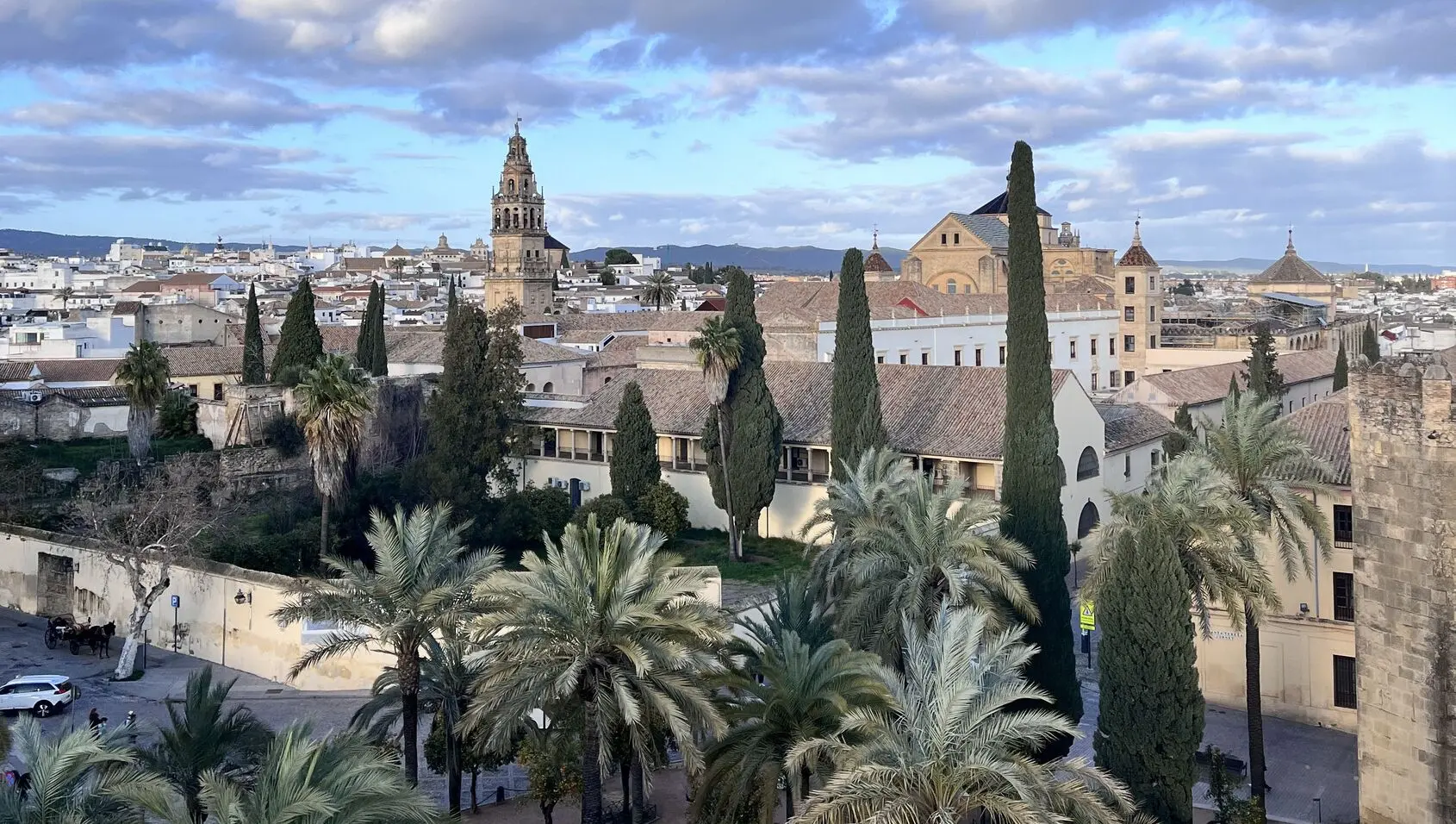
After our short stop in Consuegra, we got back on the road and reached Córdoba after a drive of around three hours. Once we had checked into our hotel, we headed out to explore the city. One of the first things we noticed was the orange trees lining the streets and how much quieter the city felt after Granada and Madrid.
When you think of Córdoba, the Mosque–Cathedral is inevitably one of the first places that comes to mind. Seeing it was also one of the main reasons we had included Córdoba in our route. After walking through its seemingly endless rows of red-and-white arches, we continued exploring the historic centre.

Along the way, we visited the gardens of the Alcázar, wandered through the narrow streets of the old Jewish Quarter and made our way to the Roman Bridge. By evening, we were standing on the bridge looking out over the city and the Guadalquivir River, bringing our day in Córdoba to an end.
Compared with Granada and Madrid, Córdoba is smaller and more compact, which made it very easy to explore on foot. The Mosque–Cathedral alone is reason enough to visit, but the narrow streets, courtyards, orange trees and riverside showed us that there is much more to the city than its most famous landmark.
📚 Detailed Córdoba Guides
→ One Day in Córdoba: From the Mosque–Cathedral to the Roman Bridge — Follow our walking route through Córdoba, including the places we visited in the historic centre and how we spent our day in the city.
→ Mosque–Cathedral of Córdoba: What Remains of Al-Andalus — Take a closer look at the history of the Mosque–Cathedral, its architectural details from different periods and the sections we saw during our visit.
💃 Seville
After our day in Córdoba, we got back on the road in the morning and reached Seville after a drive of around an hour and a half. We visited several very different cities during our Andalusia trip, but Seville was the one that impressed me the most and ultimately became my favourite. Beyond its historic character, we loved the constant energy of its streets, its large squares and especially the atmosphere after dark.
One of the main stops on our route through Seville was the Royal Alcázar. We explored its rooms, courtyards and extensive gardens, all shaped by different periods of the city’s history. From there, we visited Seville Cathedral, one of the city’s most recognisable landmarks, before continuing through the streets of the historic centre.

Plaza de España was another of our favourite places in Seville. With its sweeping semicircular building, bridges and ceramic details representing different regions of Spain, it was also one of the places where we spent the most time.
Seville felt quite different after dark. We joined the crowds on Calle Sierpes, saw the illuminated Metropol Parasol and made our way down to the Guadalquivir River. Our evening walks along the river, with the lights of Torre del Oro and the city stretching out beside us, became some of our favourite memories from Seville.
With its historic landmarks, lively streets and evening atmosphere, Seville was the city that stayed at the top of our list throughout the trip.
📚 Detailed Seville Guides
→ One Day in Seville: A Full-Day Itinerary from Morning to Night — Follow our route through Seville from morning until night, including the places we visited and how we spent our day in the city.
→ Royal Alcázar of Seville: A Fairytale in the Heart of Andalusia — Explore our visit to the Royal Alcázar, including its palaces, courtyards and gardens.
→ Seville Cathedral Guide: History, Architecture and the Giralda — From the cathedral’s interior and the Giralda Tower to its history and practical visiting details, find everything you need to know about our visit.
→ Plaza de España: One of Spain’s Most Impressive Squares — Take a closer look at one of Seville’s landmarks, from its architecture and bridges to the ceramic details representing Spain’s different regions.
🌊 Cádiz, Tarifa and Ronda
We left Seville early in the morning and set off on one of the longest driving days of our Andalusia trip. Our route would first take us to Cádiz on the Atlantic coast, then on to Tarifa and finally into the mountains to Ronda by the end of the day.
Our first stop was Cádiz. After parking the car, we walked through the narrow streets of the historic centre, explored the area around Cádiz Cathedral and continued towards the Atlantic coast. Unlike the other Andalusian cities we had visited, the sea seemed to make its presence felt almost everywhere in Cádiz.
From Cádiz, we continued south along the coast towards Tarifa. This stretch of road was one of the most enjoyable drives of the day. In Tarifa, we were at one of the points where Europe and Africa come closest together, and with clear skies we could see Morocco with the naked eye across the Strait of Gibraltar. After a short break on the coast, where the Atlantic meets the Mediterranean, we got back on the road.

After Tarifa, we left the coast behind and headed inland. The road gradually became steeper and more winding as the coastal scenery gave way to the mountainous landscape of Andalusia. Our final stop of the day was Ronda.
When we arrived, we were greeted by El Tajo Gorge cutting through the city and Puente Nuevo rising above it. After seeing the bridge both from within the town and from the viewpoints below, we wandered through Ronda’s historic streets. It was here that we brought our long day, which had started in Cádiz and continued through Tarifa, to an end.
📚 Detailed Cádiz, Tarifa and Ronda Guides
→ One-Day Road Trip in Southern Spain: Cádiz, Tarifa and Ronda — Follow our route from Seville through Cádiz and Tarifa to Ronda, including the stops we made and the places we visited along the way.
→ Ronda Travel Guide: A City on the Edge of a Cliff — From Puente Nuevo and El Tajo Gorge to our walking route through Ronda, discover the main places we visited in the city.
🌴 Málaga
We left Ronda early in the morning and headed towards Málaga. After an enjoyable drive through the mountains, we reached the city centre in around an hour and a half. We left the car in a parking garage near the historic centre and set off to explore Málaga on foot.
We started by wandering through the lively streets and shopping areas of the historic centre. We passed the Picasso Museum, a reminder that we were in the city where Picasso was born, but decided not to go inside. From there, we continued to Málaga Cathedral. While looking at the cathedral from the outside, we learned the story behind its unfinished second tower and why locals call it La Manquita, or “The One-Armed Lady.”

We continued through the historic centre to the Roman Theatre and then headed up to the Alcazaba, built into the hillside just above it. After exploring its Moorish courtyards, arches and defensive walls, we made our way back down.
From there, we followed the palm-lined promenade to Málaga City Hall. After taking a look at its ornate façade, we stopped briefly in the nearby Parque de Málaga before continuing towards the coast.

Our next stop was Malagueta Beach. After spending some time by the Mediterranean, we walked back towards the city along the harbour. Following Muelle Uno, we eventually returned to where we had started and brought our day in Málaga to an end.
This route, from the historic centre and the Alcazaba to the beach and harbour, gave us the chance to see both Málaga’s historic side and its connection to the Mediterranean in a single day.
📚 Detailed Málaga Guide
→ Málaga: Where History Meets the Mediterranean — Follow our walking route from the historic centre and Alcazaba to Malagueta Beach and the harbour, and discover the places we visited during our day in Málaga.
🧭 Practical Tips for an Andalusia Road Trip
After completing our seven-day route, I wanted to bring together a few practical notes from our experience for anyone planning a similar trip through Andalusia. From renting a car and choosing accommodation to booking tickets and deciding how many days you need, these are the things that worked for us and that I think are useful to know before setting off.
🔄 Where Should You Start Your Andalusia Road Trip?
If you’re planning to explore Andalusia by car, one approach that worked particularly well for us was planning the route as a loop. Picking up and returning the car in the same city not only makes the trip easier to organise but can also help you avoid additional one-way rental fees.
Málaga is a very practical starting point for this kind of route. After landing at Málaga Airport, we picked up our car and drove straight to Granada. At the end of the trip, we returned to Málaga via Ronda. By saving Málaga itself for the final day, we were able to explore the city before finishing the journey exactly where we had started.
This gave us one large loop: Málaga → Granada → Madrid → Toledo → Córdoba → Seville → Cádiz → Tarifa → Ronda → Málaga. If you’re planning a road trip through Andalusia, building your route so that it finishes where it started can work very well.
🚗 Can You Do This Route Without a Car?
Doing our entire route without a car wouldn’t be very practical. Spain does have intercity train connections, but particularly in Andalusia, the network and frequency of services aren’t as extensive as in countries such as Italy or Switzerland. Ticket prices can also add up quickly, especially for a family of four, making a rental car a more economical option in some cases.
Our route also included more than just the major cities. Having a car gave us the freedom to stop at the Consuegra Windmills, travel from Cádiz to Ronda via Tarifa and take breaks wherever we wanted along the way. Since there were four of us travelling together, renting a car also worked out better financially.
If you’re planning a more classic Andalusia itinerary and sticking to Granada, Córdoba and Seville, however, the situation is different. Travelling between these cities by public transport is perfectly possible, and renting a car isn’t essential. Once you add Madrid and the Cádiz–Tarifa–Ronda stretch to your itinerary, the advantages of having a car become much more noticeable.
🚗 Driving in Spain
Driving in Spain was generally quite easy. If you’ve driven in Italy before, one of the first things you’ll notice is that there seem to be far fewer traffic restrictions in city centres. Throughout our route, we didn’t have any major problems driving into or around the cities we visited.
Finding parking was also easier than we had expected. In almost every city, we were able to find either indoor or outdoor car parks close to the central areas, and parking fees were generally reasonable.
If you’re renting a car, make sure to check whether your accommodation has parking before booking. Many hotels in city centres don’t have their own parking facilities, so having a public car park nearby can make things much easier.
🎟️ When Should You Book Tickets?
On our route, the one place where I would definitely recommend booking well in advance is the Alhambra. Visitor numbers are limited, and the Nasrid Palaces in particular have specific entry times, so it’s important to buy your ticket before your trip.
For the other attractions we visited, we didn’t feel the same need to book as far in advance as we did for the Alhambra.
🌤️ What Is Andalusia Like in February?
We did this trip in early February and were quite lucky with the weather. Madrid was a little cold, but we had expected that and came prepared. In Andalusia, however, the weather was generally mild and very comfortable for sightseeing; we hardly felt cold at all during the trip.
For us, one of the best things about visiting in February was being able to walk for hours without having to deal with the heat of the summer months.
⏱️ Are 7 Days Enough for Andalusia?
Seven days were enough for the route we planned, but there’s an important point to keep in mind: as a family, we’re used to this kind of fast-paced trip. We start early, keep moving throughout the day, and our kids are just as comfortable with long walks as we are. Basically, we’re a family of “walking monsters.” 🙂
If you enjoy travelling at a similar pace, you can complete the same route in seven days. Still, I’d recommend adding at least one extra day as a buffer. It gives you more flexibility to spend longer somewhere you particularly enjoy and makes it less likely that an unexpected delay will throw off the rest of your plans. For this route, eight days would make for a much more relaxed trip.
🏙️ Is Madrid Worth Adding to an Andalusia Itinerary?
I definitely think so. Madrid does take you slightly out of the way on an Andalusia road trip, but the drive from Granada to Madrid is straightforward and gives you the chance to see the Spanish capital on the same trip. Since you can also add Toledo on the way back south, the extra kilometres feel well worth it.
I wouldn’t say the same about Barcelona. It lies in a completely different direction and deserves a separate trip of its own. Trying to squeeze Andalusia, Madrid and Barcelona into the same road trip would, in my opinion, take away from the experience and turn too much of the journey into long hours behind the wheel.
💶 Is Spain Expensive?
Of all the European countries we’ve travelled to so far, Spain was one of the most affordable for us. This was especially true in Andalusia, where food, parking and everyday expenses were quite reasonable compared with many other European destinations.
We’ve included the total cost of our trip as a family of four in the quick overview at the beginning of this post. If you’re planning a similar trip, our actual travel expenses should give you a useful reference point when working out your own budget.
🤝 People and Safety
One of the things we appreciated most about Spain was the people. Most of the people we met were friendly, helpful and easy to approach. Even when the language barrier made communication a little difficult, they usually made an effort to help us find a way to understand each other.
We also had no negative experiences when it came to safety. From Madrid to the smaller cities of Andalusia, we generally felt comfortable and safe throughout the trip. Of course, as in any popular tourist destination, it still makes sense to take the usual precautions in crowded areas.
👨👩👧👦 Travelling in Andalusia with Kids
Andalusia is also a great region to explore with children. Being able to discover most of the cities on foot, along with the mix of squares, parks, palaces, castles and constantly changing scenery, helped keep the trip interesting for the kids as well.
Our children are used to long walks, so they had no real trouble keeping up with our fairly packed itinerary. If your kids also enjoy active trips, Andalusia can be a comfortable and enjoyable destination to explore as a family.
👋 Saying Goodbye to Andalusia
By the time we returned to Málaga at the end of seven days, we had completed a packed but rewarding seven-day itinerary. We had seen a lot of cities in a short time, covered plenty of kilometres and, on some days, barely stopped from morning until night. Was it tiring? At times, yes. But if we were planning the same trip again today, we wouldn’t change much of the route.
One of the things that surprised us most was just how different the cities could feel despite being so close to one another. In Granada, we followed the traces of the Alhambra, while Córdoba introduced us to the completely different story of the Mosque–Cathedral. Seville was easily our favourite city of the trip, while Málaga turned out to be much better than we had expected. In Cádiz and Tarifa, we reached the Atlantic coast; in Ronda, we saw the mountainous side of Andalusia.

Renting a car gave us the freedom to shape the route around our own plans and make small but worthwhile stops such as Consuegra along the way. Fitting so many places into a single week won’t suit everyone’s style of travel, but for those who enjoy active, fast-paced trips, this route worked very well for us.
When we left Andalusia, it wasn’t only the cities and historic landmarks that stood out. The constantly changing landscapes, long hours on the road, evening walks and small unplanned stops along the way became just as much a part of the trip as the major sights.
And that brings our Andalusia road trip to an end. I hope our route and experiences help you when planning your own journey through Southern Spain.
See you on the next trip!


Yorumlar
Comments